

Cera to save the NHS £100m by delivering five million home care visits
- 18 October 2023
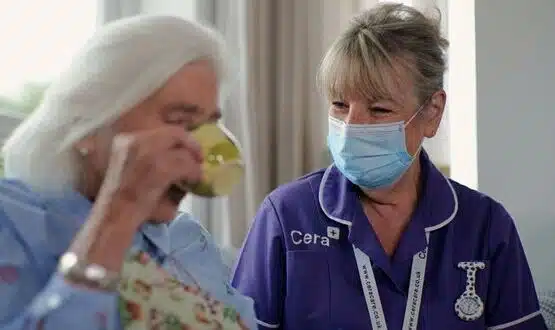


Leading home-healthcare provider Cera has announced its commitment to delivering five million care visits this winter, which is predicted to save the NHS £100 million and reduce hospital waiting times.
Cera pledges to deliver five million care visits this winter to ensure a large proportion of these patients are kept safe and well at home via its first-of-a-kind AI-powered care model that reduces hospitalisations.
During a visit from Cera’s team of carers and nurses, a patient’s symptoms and health data are collected via the Cera App, which AI uses to predict deterioration in conditions 30x faster than traditional methods and can anticipate up to 80% of hospitalisations seven days in advance.
This machine learning triggers earlier health interventions to prevent people from becoming unwell. It has been shown to reduce hospitalisation rates by an unprecedented 52%, keeping more beds free across the NHS for people who really need them.
Dr Ben Maruthappu MBE, founder and CEO of Cera, said: “With greater focus now being placed on the delivery of effective care at home, it’s clear that increasing demands on the NHS are spurring on an important transition towards digital-led and AI-enabled solutions.
“Discharging patients from hospitals and into social care settings is one of the country’s greatest healthcare priorities. Cera commits to delivering five million care visits this winter to help keep more patients out of hospital and relieve both capacity and financial pressures on the NHS.
“Our care solution, driven by a combination of AI and data analytics, helps frontline staff do more with less and keeps patients safely at home through predictive technology.
“Moving patient care from hospital to home, where appropriate, is one of the most effective ways to reduce the burden on our already-overstretched healthcare services that are facing increasing budget cuts.”
As Europe’s largest provider of digital-first home healthcare, Cera is already equivalent in capacity to 50 NHS hospitals, working with numerous NHS Integrated Care Systems and Local Authorities nationwide to deliver care, nursing and telehealth services in patients own homes.
In August, we reported that Cera has developed and launched AI that predicts people falling at home a week before it happens with 83% accuracy.




1 Comments
“During a visit from Cera’s team of carers and nurses, a patient’s symptoms and health data are collected via the Cera App, which AI uses to predict deterioration in conditions 30x faster than traditional methods and can anticipate up to 80% of hospitalisations seven days in advance.
This machine learning triggers earlier health interventions to prevent people from becoming unwell. It has been shown to reduce hospitalisation rates by an unprecedented 52%, keeping more beds free across the NHS for people who really need them.”
Impressive – if true: could we see the data, including the initial patient selection, the conditions & patient demographics included, & whether the Cera team provides any care or treatment to avert hospitalisation as opposed to assessment & prediction?
If the aim is to prevent hospitalisation – presumably in patients at imminent risk of being hospitalised due to an acute condition or deterioration of a pre-existing one – does this replace or assist primary care – GP, district nurse, social care – or increase their workload?
& whose budget – apart, possibly, for hospitals’ – will benefit from any savings made: will it be the same budget paying for the service?
A few more details – including how this will be implemented – would be very interesting..
Comments are closed.